
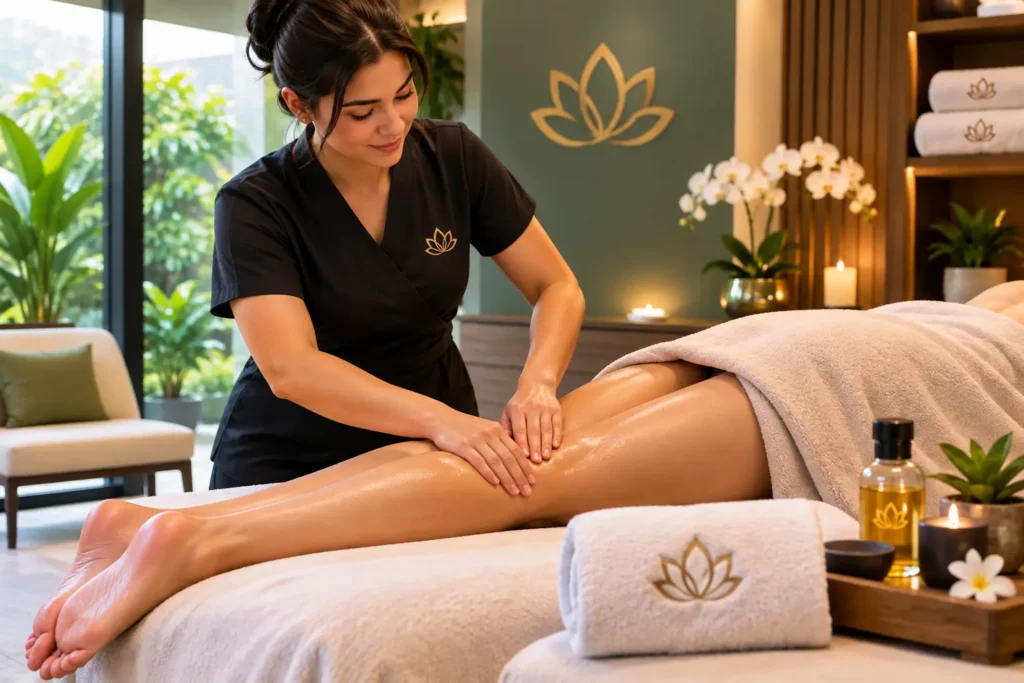
Best Massages for Sore Legs and When to Book
A long flight into Cancún, a full day of walking the Hotel Zone, an intense workout, or hours beside the pool can leave your legs feeling much heavier than expected. The best massages for sore legs are not always the strongest ones. The right choice depends on whether you are dealing with tired muscles, tight calves, post-workout soreness, stiffness, or a lingering overuse issue.
Professional bodywork can help relax tense tissue, improve how your legs feel and move, and give you a much-needed reset before the next day of vacation or activity. The key is telling your therapist exactly where the discomfort is, when it began, and whether pressure feels relieving or sharp.
What Is Causing Your Leg Soreness?
Sore legs can come from simple muscle fatigue, especially after travel and sightseeing. Sitting for long periods can leave the hips, glutes, hamstrings, calves, and feet feeling tight. Then, when you begin walking more than usual, those areas have to work harder.
Exercise creates a different pattern. Runners, gym guests, golfers, cyclists, and tennis players often feel tightness in the calves, quads, hamstrings, and the connective tissue around them. A focused massage may support recovery, but very deep work immediately after an unusually demanding workout is not always the best plan. When muscles are highly tender, a skilled therapist may begin with lighter circulation-focused strokes and gradually work deeper where the tissue can receive it comfortably.
There is also a difference between normal soreness and pain that needs medical attention. Massage should be postponed if you have sudden one-sided swelling, warmth, redness, a suspected blood clot, an open wound, fever, numbness, or severe unexplained pain. If you are unsure, seek medical guidance first. A professional massage complements appropriate care; it does not replace a medical diagnosis.
The Best Massages for Sore Legs
Swedish Massage for Tired, Heavy Legs
Swedish massage is an excellent choice when your legs feel fatigued after flying, walking, standing, or enjoying a busy vacation schedule. Long, flowing strokes and gentle kneading encourage relaxation while easing surface-level muscle tension. It is especially well suited to guests who want relief without the intensity of deep pressure.
This treatment can include the feet, ankles, calves, thighs, hips, and lower back, because leg discomfort often starts higher up the body. A relaxed lower back and hip area can make the entire leg feel less restricted. Swedish massage is also a smart first appointment if you do not regularly receive massage and are unsure how your body responds to firmer work.
Deep-Tissue Massage for Persistent Tightness
Deep-tissue massage is often the best option for stubborn tight calves, dense hamstrings, overworked quads, and recurring tension that does not release with light massage. The goal is not to make you endure pain. It is to use deliberate, controlled pressure to address deeper layers of tight muscle and connective tissue.
This style can be particularly valuable after repetitive activity, such as running, cycling, long walks, or frequent workouts. It may also help when long travel days have left you feeling stiff and compressed. Still, deeper does not automatically mean better. Too much pressure can leave already irritated tissue feeling worse, so communication matters throughout the session. A licensed therapist should adjust the work based on your comfort, breathing, and muscle response.
Sports Massage for Active Guests and Recovery Days
Sports massage is designed around how you use your body. It is a practical choice for active travelers and local clients dealing with workout-related leg soreness, reduced range of motion, or muscle fatigue before or after an event. Rather than following one fixed routine, the therapist can focus on the specific areas your activity has stressed.
For example, a runner may need attention around the calves, feet, hamstrings, and glutes. A cyclist may benefit from work on the quads, hip flexors, and outer thighs. Someone who has been walking all day may need calf and foot relief combined with gentle work around the hips and lower back. The pressure can range from relaxing to targeted, depending on your condition and timing.
If you have an important physical activity planned the next morning, ask for recovery-focused work rather than an aggressive session. You want to feel mobile and refreshed, not tender from overly intense pressure.
Fascial Release for Restricted Movement
Fascial release is a more focused approach for areas that feel bound, stiff, or limited in movement. Fascia is the connective tissue that surrounds muscles and other structures throughout the body. When the legs feel tight even though you have stretched, slow, sustained techniques may be more useful than fast, heavy pressure.
This work can be helpful for clients who describe a pulling sensation through the calves, outer thighs, hamstrings, or hips. It is also valuable when tightness seems to return quickly after activity. Fascial techniques are typically performed with patient, intentional contact, allowing the tissue time to soften rather than forcing a release.
Hot-Stone Massage for Deep Relaxation
Hot-stone massage combines therapeutic touch with warmed stones to relax tight muscles. Heat can make it easier for the body to settle, which is ideal when your sore legs are part of overall stress, travel fatigue, or full-body tension.
For many guests, this is less about sports recovery and more about feeling restored. Warm stones on the calves, thighs, feet, and back can create a deep sense of comfort while the therapist works without relying on excessive pressure. If your legs are sensitive to touch, the warmth may allow a gentler approach that still feels effective.
Hot stones are not appropriate for every situation, including areas with reduced sensation, acute inflammation, or certain circulation concerns. Let your therapist know about any health conditions, recent injuries, or sensitivity to heat before the session begins.
Reflexology for Aching Feet and Calves
When soreness begins in the feet and travels upward, reflexology can be a satisfying addition to a leg-focused massage. This treatment concentrates on the feet with pressure techniques intended to promote relaxation and ease tension. It is a natural fit after beach walks, shopping, excursions, or hours spent in sandals.
Reflexology does not replace hands-on work for very tight calves or hamstrings, but it pairs well with it. Clients who feel foot fatigue, arch tightness, or general lower-leg heaviness often appreciate a session that includes both focused foot work and massage through the calves.
How to Choose the Right Pressure
The most effective massage pressure is the pressure your body can accept and release into. During a sore-leg massage, it is normal to feel productive intensity in a tight muscle. It is not productive to brace, hold your breath, or experience sharp pain.
Ask for light to medium pressure if you are jet-lagged, new to massage, sun-sensitive, or generally sore all over. Consider medium to firm pressure for recurring muscular tightness when you are used to bodywork. Choose a customized deep-tissue or sports approach when you can clearly identify overworked areas and want focused therapeutic attention.
Good therapists do not treat every part of the leg with the same force. Calves may need one approach, while tender quads or tight hip flexors need another. That personalized adjustment is what turns a generic massage into care that supports real relief.
Make Your Massage Work Better After the Appointment
Give your legs a little support after treatment. Drink water, take an easy walk if it feels good, and avoid immediately returning to an intense workout after deep work. Gentle movement helps you notice how your body responds without loading sore tissue too heavily.
If you have spent the day in the sun, rehydrate before your appointment and tell the therapist about any tender or sunburned areas. Wear comfortable clothing afterward, particularly if you have a flight, dinner, or excursion planned. A massage should leave you feeling cared for, not rushed.
At Matrix Spa & Massage Cancun, licensed therapists can customize Swedish, deep-tissue, sports, hot-stone, reflexology, and fascial-release treatments at the spa or in the privacy of your hotel room. Appointments are scheduled in advance, so you have time to discuss your needs and choose the service that suits your day.
When your legs are asking for relief, listen early. A well-timed appointment can turn tomorrow’s walk, workout, or sunset dinner into something you enjoy instead of something you push through.